 Nederlands


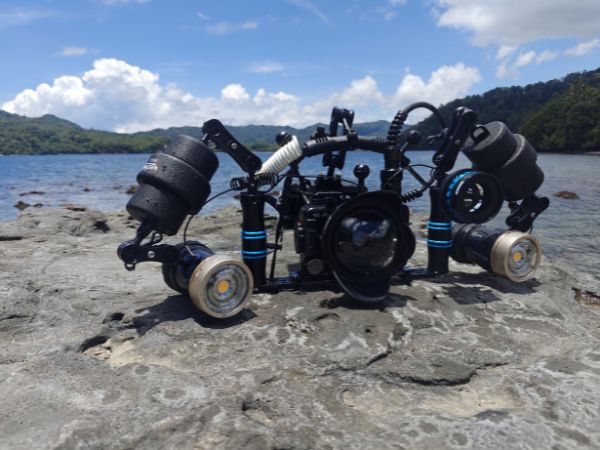
A good underwater photo or video doesn't start with your camera or your lighting, but with control. And you only truly gain control when your underwater camera rig is neutrally buoyant. Not heavily pulling on your wrist, not floating upwards, but calmly "hanging" in the water.
With Weefine float arms and float blocks, you can precisely adjust that buoyancy. In this blog, we explain why neutral buoyancy is so important, which Weefine solutions are available, and how to use them in practice.
Why neutral buoyancy is so important
As soon as you start diving with an underwater camera think of a housing, arms, clamps, lights, or strobes your rig quickly becomes negative. You will notice this immediately:
- Your arms get tired faster
- Your camera constantly pulls downwards
- Stable filming or precise framing becomes more difficult
A neutral or slightly negative rig solves this. Your camera feels almost weightless underwater and moves much more smoothly with your body. This provides immediate benefits:
- More stable images (especially for video and macro)
- More control when framing
- Less physical strain during long dives
- More focus on your subject, less on your equipment
How Weefine helps with buoyancy
Weefine offers two smart solutions to add buoyancy to your setup:
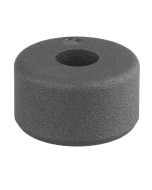
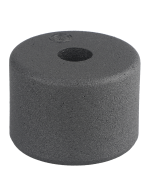
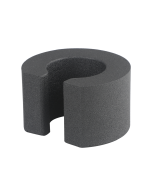
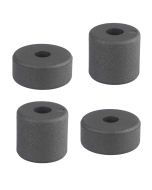
- Weefine float blocks
- Weefine adjustable float arms
Both have the same goal; getting your camera neutral, but they achieve it in different ways.
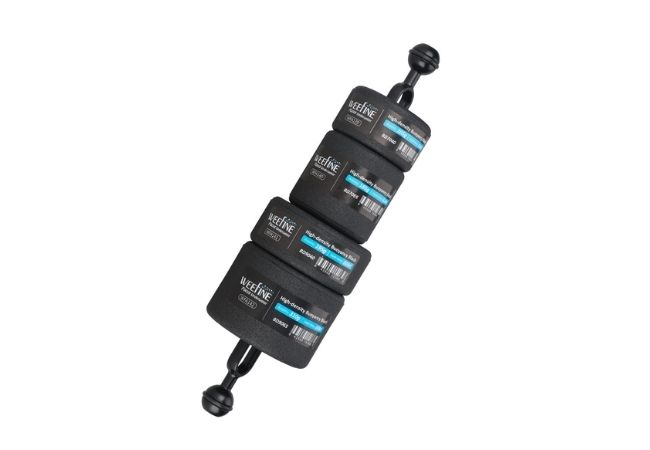
1) Weefine float blocks: modular and precise adjustment
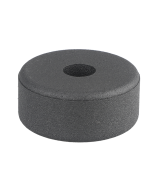
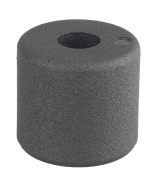
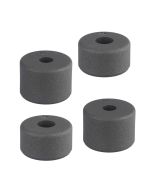
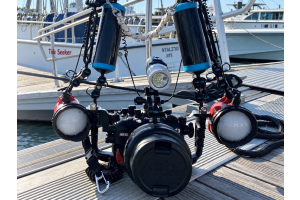
Weefine float blocks are compact buoyancy elements that you mount onto your ball arms. They add a fixed amount of lift (for example ±185 grams per block), allowing you to fine-tune step by step.
Why choose float blocks?
- You want to be able to adjust precisely
- Your rig is light to medium negative
- You want to keep your arms compact
- You frequently change configurations
- More affordable than Carbon float arms
The big advantage of float blocks is modularity. Add one block, test in the water, and determine if you need another step. This prevents your setup from suddenly becoming too positive.
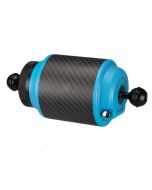
2) Weefine adjustable float arms: maximum flexibility
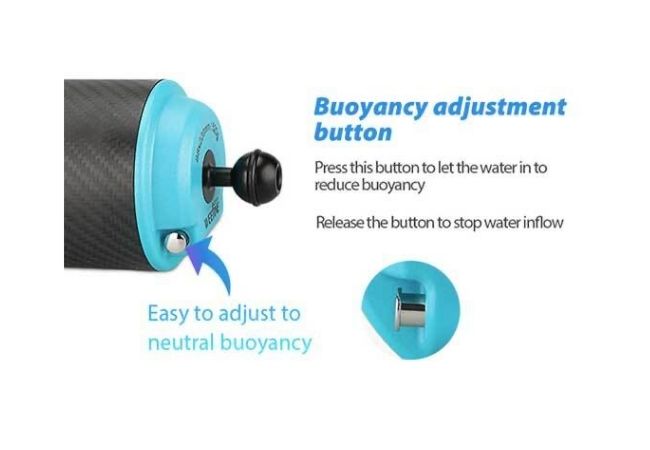
The adjustable float arms from Weefine are ideal for divers who frequently switch between setups. These arms have adjustable buoyancy, up to approximately +520 grams per arm.
By allowing water into the arm or letting it drain out, you easily adjust the buoyancy.
When are adjustable float arms ideal?
- You often switch between strobes and video lights
- You use multiple configurations with the same housing
- You want to be able to trim quickly underwater
- Your rig is significantly heavier and needs more (positive) buoyancy
Instead of swapping multiple float blocks, you adjust the arm to your current setup with a single action.
How do you determine how much buoyancy you need?
This is simpler than many people think.
Step 1 – Build your complete setup
Assemble everything as you would dive with it:
- Camera + housing
- Port or dome
- Arms, clamps
- Strobes or lights
- Any focus lights or accessories
Step 2 – Test in water
Carefully submerge your rig in the water (for example, in a rinse tank or shallow water).
- Sinks quickly → strongly negative
- Sinks slowly → slightly negative
- Stays suspended → neutral
- Floats up → too positive
Do you want to know exactly what your complete camera rig weighs underwater? We have written a handy blog where we explain step-by-step how you can easily measure and calculate this yourself.
Step 3 – Work towards neutral
Most photographers and videographers choose to be just slightly negative. This feels stable but almost weightless.
Don't forget the balance (trim)
A rig can be perfectly neutral but still feel uncomfortable if it is out of balance.
Common issues:
- Lightweight acrylic dome port → rig tilts backwards
- Light positioned far out → rig pulls to the side
Practical tips:
- Place buoyancy on the outermost arms
- Distribute lift as evenly as possible between left and right
- Build in small steps and test in between
Good trim makes the difference between "it works" and "this dives wonderfully." And diving in a relaxed manner is, of course, the best part!
Examples of Weefine setups
Compact set (compact camera or action cam without wet lenses)
- 1–2 Weefine float blocks
- Perfect for light rigs with one light
Compact / Mirrorless / DSLR with two strobes or lights
- Multiple float blocks distributed across the arms
- Or adjustable float arms combined with smaller blocks
Maintenance & usage tips for Weefine float arms
- Rinse everything thoroughly after every saltwater dive
- Drain adjustable float arms after the dive
- Regularly check O-rings and seals
- Re-test your buoyancy whenever you make changes to your setup
Conclusion
A neutral underwater camera rig is not a luxury, but an essential part of good underwater photography and filming. With Weefine float blocks, you choose precision and modularity. With Weefine adjustable float arms, you choose flexibility and convenience. Which option is best depends on your setup and diving style, but one thing is certain: once you have dived neutrally, you will never want to go back.