 Nederlands


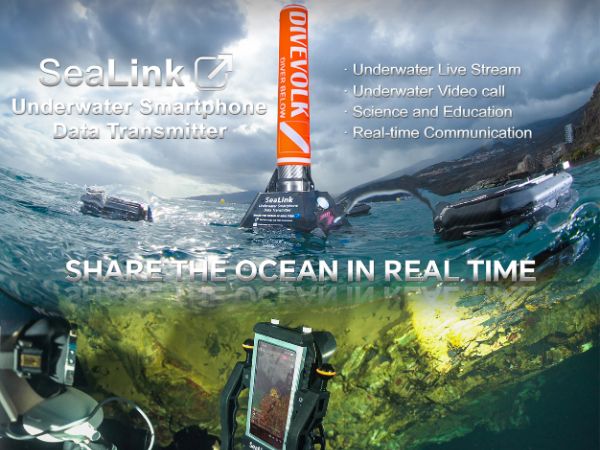
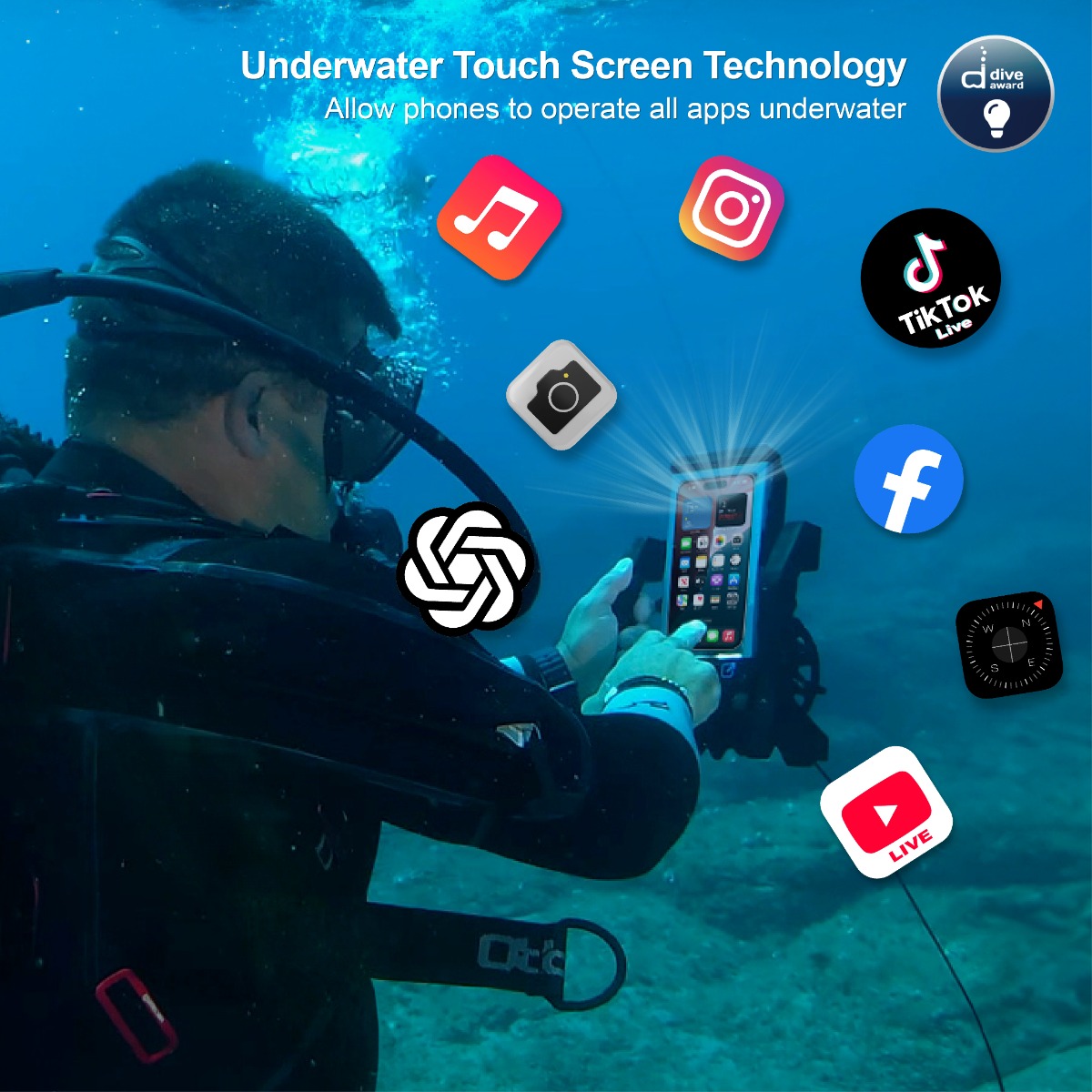
Normally, you have no signal underwater, so you only share footage and stories after the dive. With the DiveVolk SeaLink, your smartphone can stay connected while you’re below the surface. You place your phone in a dedicated DiveVolk underwater housing, connected by a cable (up to about 30 m / 98 ft) to a floating surface communication unit with a SIM card. As long as there is mobile coverage above water, live streaming and real-time data use become possible during the dive. If the diver uses a full-face mask with a communication unit, you can even make calls to the diver. Even if you’re on the other side of the world. Apps that need internet access can also be used underwater through this setup, which opens up a lot of practical options for inspections, research, and many other use cases.
How does the SeaLink work (simple overview)?
The SeaLink consists of two main parts: a surface unit that stays afloat and an underwater terminal with the diver. These are connected by a cable of roughly 30 m (98 ft). The phone remains connected underwater through the link to the surface unit. As long as there is mobile signal at the surface, live video, video calls, and using online apps underwater are possible.
Who is SeaLink especially useful for?
SeaLink is most relevant when people at the surface need to watch along and make decisions quickly. That can be valuable in trainings, inspections, and projects where timing and coordination matter. Think of specialised dive training, professional divers, researchers, biologists, inspectors, documentation teams, and surface support teams working in and around water.
Practical examples
- Training: an instructor can watch live and give guidance.
- Inspection: surface teams can follow along while checking piers, vessels, or structures.
- Research: share live footage with colleagues on shore or on a boat.
- Events: send underwater footage directly for broadcasting. Going live or posting short content while still underwater.
- Support: faster consultation if something unexpected happens.
Talking to the diver: what’s possible and what isn’t?
The SeaLink provides the data connection. “Talking” can happen in two ways, depending on your setup. At a basic level, teams can communicate via text, signals, and visuals because the surface team can watch live. True voice communication only works if the diver uses a full-face mask with a dedicated communication set (for example Oceanreef DivinTok) that includes a microphone and speaker. In that case, voice can be transmitted as audio via the smartphone connection.
Key technical points to keep in mind
The specified working depth is up to about 30 m (98 ft). The connection runs through a cable, so the diver stays physically linked to the surface unit. Mobile coverage is required above water. Without signal at the surface, live data is not possible. According to the product specifications, battery life is around 60 hours and the operating temperature range is approximately -10 to 50 °C (14 to 122 °F). Total weight is about 9.5 kg (21 lb). The cable is specified for roughly 5 kg (11 lb) pulling load.
In short
The DiveVolk SeaLink allows a smartphone to stay connected underwater via a floating surface unit. This enables real-time footage sharing, app usage, and live communication during the dive. Combined with a full-face mask and communication set, voice communication is also possible. SeaLink is therefore particularly suited to training, inspections, research, and other situations where live viewing and quick coordination are important.
If you plan to use this system, it’s smart to test it on location first: check mobile coverage above water and agree on clear procedures for communication during the dive.