 Nederlands


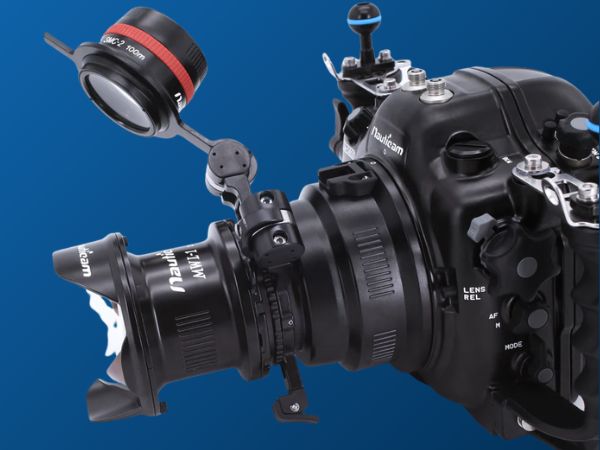
Using wet lenses underwater gives you a lot of flexibility, but constantly removing and reattaching them during a dive can be slow and inconvenient. A flip adapter solves this problem by allowing you to switch lenses instantly without taking them off your housing.
Whether you are shooting macro or switching between different close-up setups, a flip adapter helps you work faster and more efficiently underwater. In this guide, we explain how flip adapters work, when you need one, and how to use them during a dive.
What is a flip adapter?
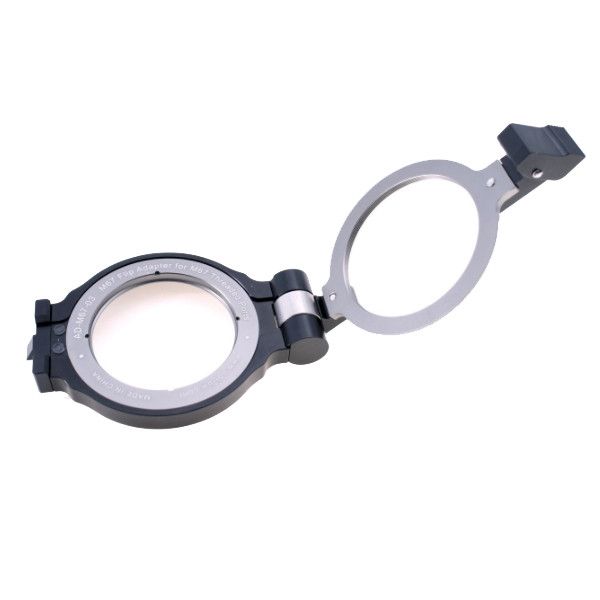
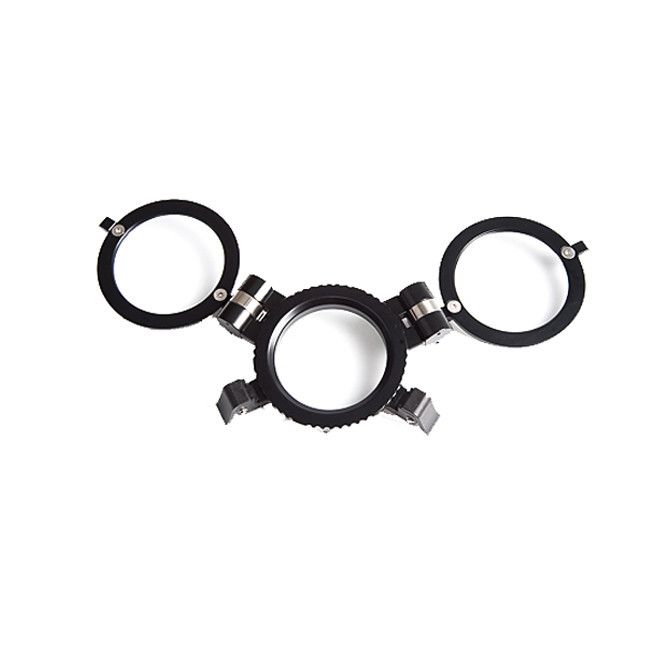
A flip adapter or flip holder is mounted to the front of an underwater housing and holds one or more wet lenses on a hinged arm. By flipping the adapter in front of the port, you bring the lens into position. When you no longer need it, you simply flip it away. This allows you to switch between different optical setups without removing your lens underwater. Flip adapters are mainly designed for macro lenses. Wide-angle wet lenses are typically not used with flip adapters. These lenses need to be positioned very close and precisely in front of the port to maintain image quality.
Why wide-angle lenses are not suitable for flip adapters:
- Distance matters: wide-angle wet lenses are designed to sit extremely close to the port glass. A flip adapter usually adds extra space, which can reduce image quality.
- Alignment is critical: wide-angle lenses must be perfectly centered. Small shifts can cause blurry edges, vignetting or dark corners.
- Too big and heavy: wide-angle wet lenses are often larger and heavier, while flip adapters are mainly built for macro lenses.
For wide-angle setups, a quick-release solution such as a bayonet mount system is usually a better choice. This keeps the lens securely aligned and at the correct distance from the port.
How does a flip adapter work underwater?
The system is designed for quick and controlled movement. The adapter stays attached to your housing at all times, while the lens is rotated into place when needed.
- Flip the lens in front of the port when needed
- Flip it away when switching subjects or compositions
- Keep full control of your setup without removing equipment
This is especially useful when switching between different shooting distances during a single dive.
Depending on the system, flip adapters are mounted in different ways. Some adapters clamp directly onto the front of the housing port, while others are screwed into the M67 thread on the port. Both solutions provide a stable base, but the mounting method depends on your housing and preferred setup.
How to use a flip adapter during a dive
In practice, a flip adapter makes your workflow much smoother. Instead of stopping to remove a wet lens, you can react instantly to changing situations.
For example, when shooting macro subjects:
- Flip the macro lens in for close-up shots
- Flip it out when you need a wider view of the same subject
This is much faster than removing a lens and storing it during the dive.
Single and double flip adapters
Flip adapters are available in different configurations depending on how many lenses you want to use. A single flip adapter holds one wet lens and is often enough for most setups. A double flip adapter allows you to carry two macro lenses with different strengths, making it possible to switch quickly depending on the size of your subject. The best choice depends on how flexible you want your setup to be during a dive.
Stacking lenses by flipping one macro lens on top of another is generally not recommended. In theory this can be done, but in practice it often reduces sharpness and contrast because of the extra water layers between the lenses.
When do you need a flip adapter?
A flip adapter is especially useful if you regularly switch between different types of close-up shots underwater.
- Macro photography where you need to change magnification quickly
- Dives where subjects vary in size and distance
- Situations where removing a wet lens is not practical
If you always shoot the same type of subject, a flip adapter may be less essential. But for many underwater photographers, it quickly becomes a valuable part of the setup.
Common mistakes when using flip adapters
Although flip adapters are easy to use, there are a few things to keep in mind.
- Using the wrong thread size, such as M52 instead of M67
- Incorrect alignment with the housing port
- Using lenses that are too heavy for the adapter
Making sure your setup is properly aligned and compatible will improve both stability and image quality.
Flip adapter vs removing your wet lens
Without a flip adapter, you need to remove your wet lens manually and store it somewhere during the dive. This takes time and increases the risk of dropping or damaging your equipment. A flip adapter keeps everything attached to your housing, making switching faster, safer and more efficient.
Kit lens users: when a bayonet system is better
Underwater photographers using a system camera with a kit lens, such as the Olympus 14-42 EZ, Sony 28-60 or Nikon 24-50, and wanting to switch between macro and wide-angle during the same dive, are usually better off with a bayonet system instead of a flip adapter. This is because wide-angle wet lenses require very precise positioning, while macro lenses benefit from the flexibility of a flip system. Want to learn more about this setup? Read our guide on using wet lenses with a kit lens underwater.
Maintenance and care
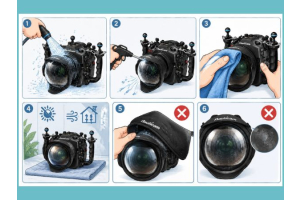
After a dive, it is important to properly rinse and maintain your wet lens and flip adapter. Removing the lens before rinsing helps protect both the optics and the mechanism.
- Saltwater, sand and debris can get trapped between the lens and adapter, and removing the lens allows proper rinsing
- It helps prevent corrosion, mineral buildup and parts sticking together over time
- Separating them also helps both components dry completely and protects coatings and moving parts
Good maintenance keeps your setup working smoothly and helps extend the life of both your lenses and your adapter.
Find the right flip adapter for your setup
Choosing the right flip adapter depends on your housing, thread size and the lenses you want to use. Most systems use M67 mounts, which are compatible with a wide range of wet lenses.
Browse our range of flip adapters for underwater housings to find the right solution for your setup and take a look at our conversion lenses to complete your underwater configuration.