 Nederlands


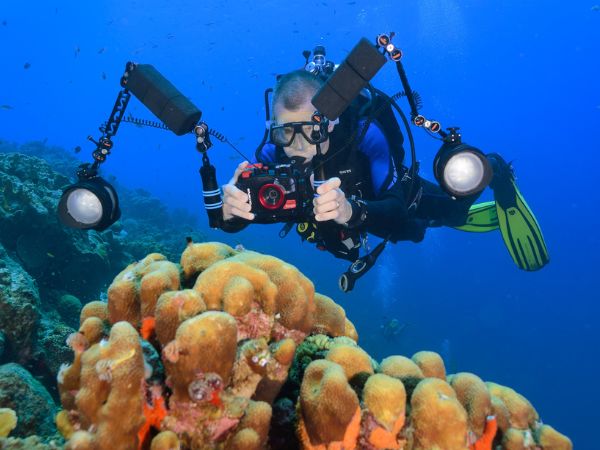
Choosing an underwater housing usually starts with the camera or smartphone you already own. Most housings are designed for a specific device, so compatibility determines which options are available. This guide explains how to select an underwater housing for a camera or smartphone you already own. It covers compatibility, camera types, port systems and accessories used in underwater photography and video.
If you already know your camera model, you can browse the available options in our underwater housing category to see which housings are compatible.
Check if a housing exists for your camera or smartphone
The first step is to check whether an underwater housing exists for your device. Not every camera model has a compatible housing. For some cameras only one housing manufacturer produces a compatible model. Other cameras may have two or three housing options from different manufacturers. Occasionally a camera model has no housing available.
Smartphones are different. Smartphone housings are often universal systems that can be used with several phone models for underwater photo and video recording.
Types of underwater housings by camera system
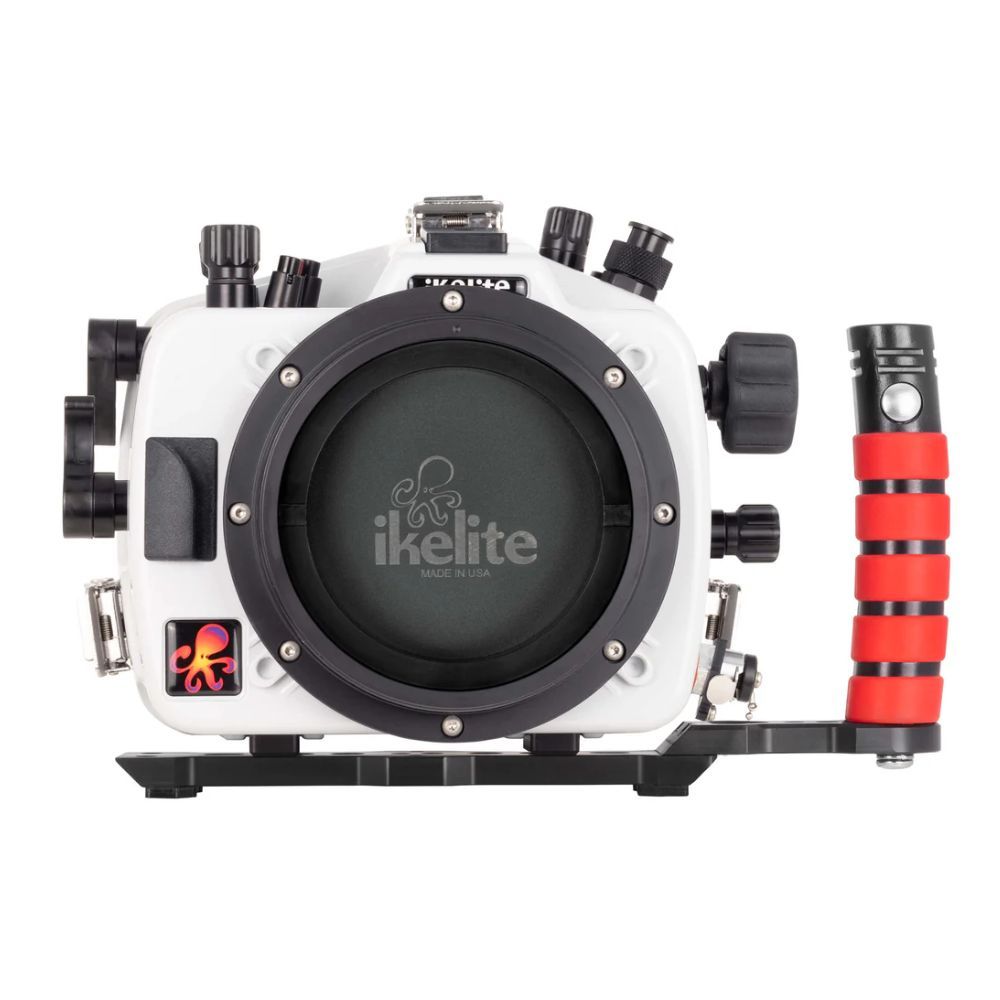
Underwater housings are designed for specific camera types. The construction of the housing depends on whether the camera uses interchangeable lenses or a fixed lens.
Some housings contain a fixed front port. Other housings use a modular port system that allows different lenses to be used underwater for photography and video work.
- mirrorless camera housings with interchangeable ports
- DSLR camera housings with interchangeable ports
- cinema camera housings for professional film production
- compact camera housings with fixed lens ports
- action camera housings
- smartphone underwater housings
Mirrorless and DSLR housings usually require additional components such as zoom gears or focus gears. These gears connect the external control knobs of the housing to the lens so that zoom or focus can be adjusted while the camera remains sealed inside the housing. The port and gear combination must match both the lens and the housing system. Manufacturers provide compatibility tables that indicate which port and extension rings are required for a specific lens setup.
Professional cinema housings are designed for large cameras such as ARRI ALEXA, RED and other digital cinema systems. These housings are used in film production, scientific research and specialised underwater video and imaging work.
Find housings by camera brand
Another practical way to locate a compatible housing is to search by camera brand. On underwater housing category pages you can filter the available housings by camera brand. This allows you to narrow the results to housings designed for your camera system.
For example, housings are commonly available for camera brands such as:
- Canon
- Sony
- Nikon
- OM System / Olympus
- Panasonic
- Fujifilm
If you want to understand how different underwater housing manufacturers compare, see our overview of underwater housing brands.
If you already know the exact camera model, entering the model name in the website search bar can also help identify compatible housings for underwater photo or video use.
Underwater housing materials
Underwater housings are generally manufactured from aluminium or polycarbonate. Both materials protect the camera from water pressure and external impact during underwater photo and video recording. Aluminium housings are commonly used for advanced systems with interchangeable lenses. Polycarbonate housings are lighter and often used for compact cameras or entry-level setups.
Dome ports and flat ports
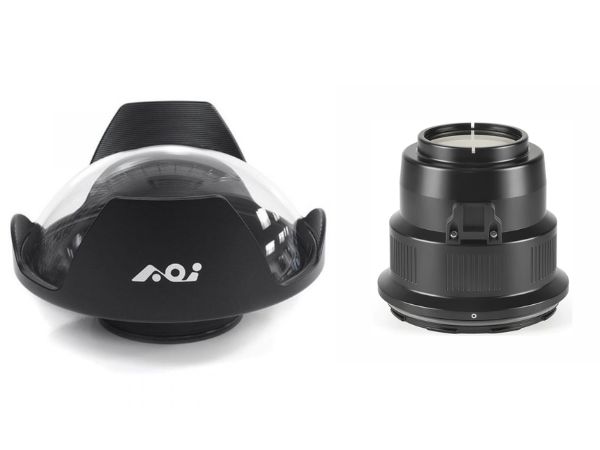
The port is the optical interface between the camera lens and the surrounding water. The type of port influences how light enters the lens and therefore affects image quality in underwater photography and video.
Two main port types are used in underwater photography. A dome port is commonly used for wide angle lenses. The curved surface helps maintain the field of view underwater and reduces distortion caused by refraction. A flat port is typically used for macro lenses or standard lenses. Because water magnifies the image slightly, flat ports can increase the apparent magnification of small subjects. The optical differences between these port types are explained in more detail in our guide on dome ports and flat ports.
The correct port depends on the lens, the housing system and the type of photo or video being recorded.
Safety systems in underwater housings
Many modern underwater housings include safety systems that help reduce the risk of water entering the housing. One example is leak detection. A leak detector inside the housing monitors moisture levels and provides a warning if water enters the housing. Some housings also include a vacuum check system that allows the user to test the seal before entering the water. These systems are commonly used on aluminium housings designed for professional underwater photography and video production.
Accessories used with underwater housings
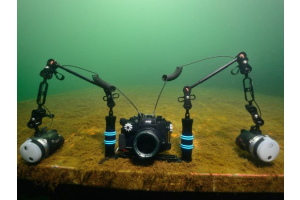
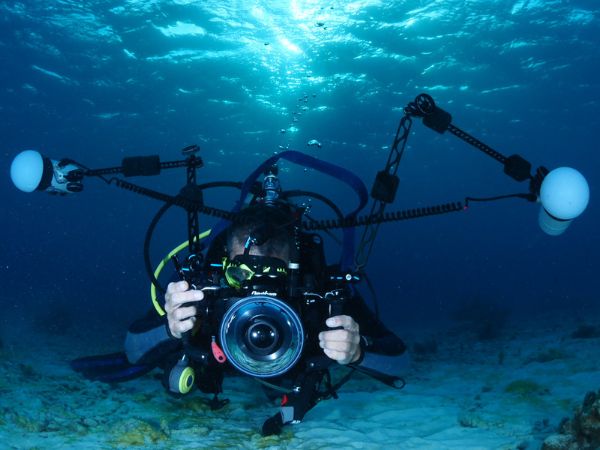
Underwater housings are often combined with accessories that improve lighting, stability and camera control. Common accessories include external monitors, lighting arms, strobes, video lights, conversion lenses and vacuum leak detection systems. External monitors can assist with manual focusing and framing when shooting video or underwater photography, especially when working with macro subjects.
Some housings can also be equipped with charging or data transfer bulkheads that allow the camera battery to be charged without removing the camera from the housing.
Why housings are also used for snorkeling
Underwater housings are not only used for deep diving. They are also recommended for snorkeling, shallow water photography and video recording, and coastal environments. Saltwater can damage camera controls and electronic contacts. Even cameras or smartphones that are labelled as water resistant can be affected by salt crystals that accumulate around buttons and seals. Using a dedicated underwater housing reduces direct exposure to saltwater and allows the equipment to be rinsed safely after use.
Decision steps when choosing a housing
Choosing an underwater housing usually follows a practical sequence.
First check whether a housing exists for the camera or smartphone you use. Next compare the available housings from different manufacturers.
If you are searching on the website, you can filter the underwater housing category by camera brand to narrow the results. Entering the camera model in the search bar can also help identify compatible housings.
If compatibility between the camera, lens and housing system is unclear, our team can help verify which housing and port configuration is suitable.
When comparing different housings, the following aspects usually determine the final choice:
- compatibility with the camera model
- number of housing manufacturers available
- port system compatibility with the lens used underwater
- depth rating appropriate for diving conditions
- compatibility with accessories such as lights or monitors
Selecting an underwater housing usually starts with the camera or smartphone you already own. Once compatibility is confirmed, the remaining choice depends on the housing system, the lenses used and the accessories required for underwater photography or video work. Using the filters in the underwater housing category and entering the camera model in the search bar can help identify compatible housings more efficiently.
Where to buy your underwater housing
Choosing the right underwater housing is important, but choosing the right dealer matters too. A reliable specialist can help you with compatibility, accessories, service, and long-term support. Read our guide on how to choose a reliable underwater housing dealer and what to look for before you buy.