 Nederlands


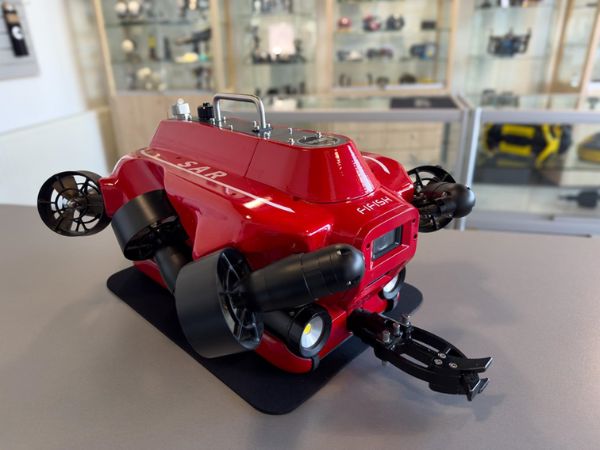
Underwater drones are playing an increasingly important role in search and rescue (SAR) operations. In situations where visibility is limited and time is critical, technologies like ROVs and sonar make it possible to work faster and more efficiently.Want to learn more about the different applications and how to choose the right underwater drone? Read our complete guide to underwater drones and ROVs.
When fast localisation and deployment are critical
A car has entered the water and has sunk to a depth of 6 meters. It is unknown whether the driver managed to exit the vehicle. Fire brigade divers arrive on site with urgency. Their goal is to locate the vehicle as quickly as possible so they can proceed directly to the rescue. The combination of an underwater drone and sonar proves essential here. Within just minutes after arrival, the car is located. It was already detected underwater at a distance of 6 meters, while visibility was reduced to only a few centimeters.
By attaching the drone to the wreck using the gripper arm, the diver can follow the tether cable straight to the target without performing a search pattern. This saves valuable time, increases safety, and improves coordination for the team on shore. Fortunately, this scenario was part of a training exercise.
The role of underwater drones in search and rescue
Underwater drones are increasingly used by emergency services, also in the Netherlands. Traditional diving operations have clear limitations such as poor visibility, time pressure and physical strain. With an ROV or underwater drone, a significant first step can be taken without replacing the diver. This results in safer and more efficient operations during search and rescue or inspection tasks, especially in inland waters.
For bystanders, it can sometimes feel counterintuitive that a drone is deployed first while someone monitors a screen before a diver enters the water. This requires trust in the equipment and proper coordination. Once teams become familiar with this workflow, it significantly improves both efficiency and safety.
How is an underwater drone deployed?
During this session, the focus was on the basics: locating an object, in this case a vehicle. Traditionally, a diver would perform a search pattern, often relying on touch and limited visibility. Using the drone in combination with multibeam sonar, the wreck was located within minutes.
How sonar creates a helicopter view underwater
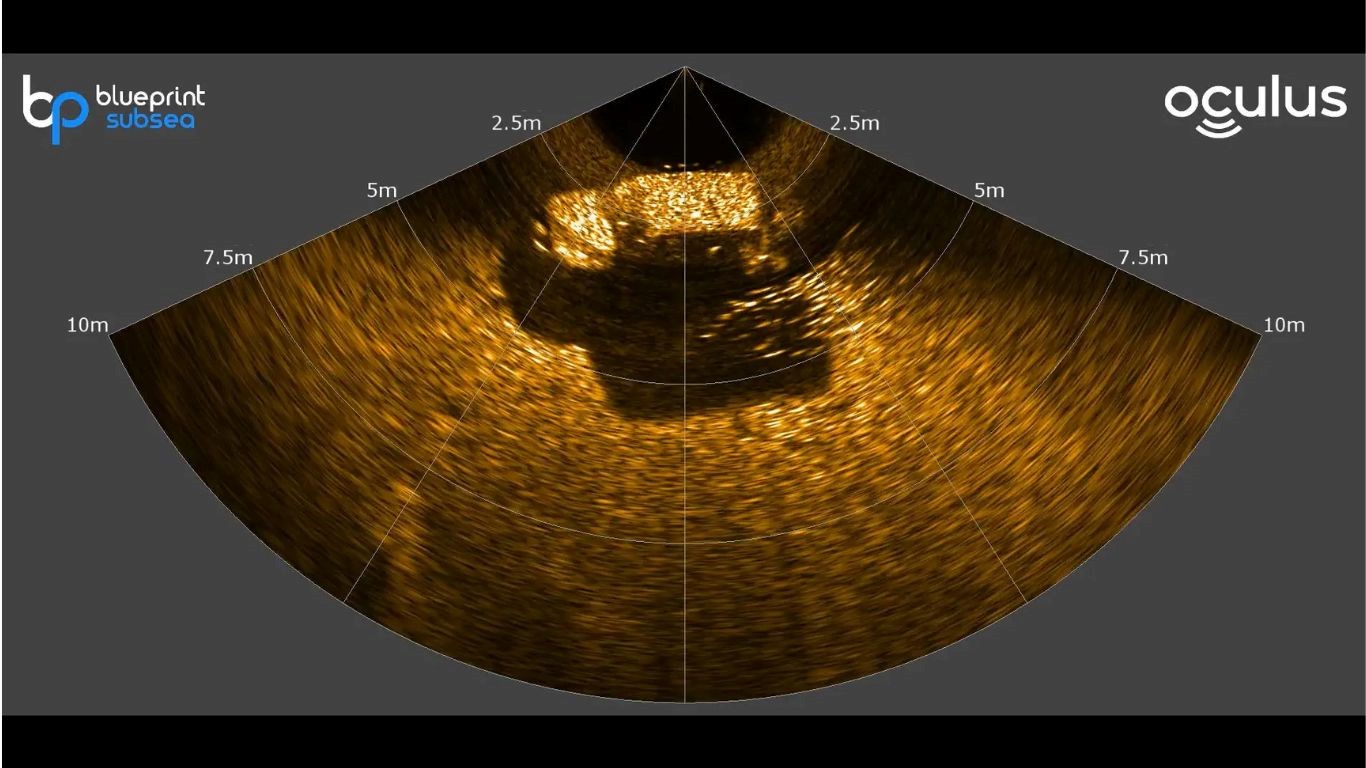
© Blueprint Subsea | image of car including school of fish with Oculus M750D
Multibeam sonar systems such as the Blue Oculus M1200d or at least the M750d provide a clear image of the seabed and surroundings, up to 40 meters with the M1200d. By positioning the sonar at a specific angle relative to the bottom, a complete overview of the incident is created. This enables accurate coordination and allows the shore team to guide the diver efficiently.
In low visibility conditions, the difference is significant. Objects appear directly on screen, allowing faster and more effective decision making.
Want to understand how sonar works in real-world situations? Read more about how sonar works on an underwater drone.
From detection to action with a gripper arm
Once the object has been located, the drone can make physical contact using a gripper arm. This allows the diver to move directly to the correct position without searching. The result is a targeted operation, reduced dive time and improved safety. The drone provides an essential overhead view of the underwater situation.
Underwater visibility versus sonar
Visibility underwater is often extremely limited, especially during SAR operations. Sonar overcomes this limitation. With a range of tens of meters, it becomes possible to quickly locate objects, identify structures and map the environment before a diver enters the water. This significantly improves both efficiency and safety.
Saving time when every minute counts
Time is critical during SAR operations. Although deploying a diver may take slightly longer initially, this time is recovered because no search patterns are required. The diver can go straight to the target. These saved minutes can make a crucial difference in rescue situations.
The impact of current on drone deployment
During this exercise, water conditions were favorable with minimal current, allowing the drone to maintain position easily and helping operators develop control skills. Current is always a key factor when deploying an underwater drone.
A practical guideline is to take the maximum speed of the drone and subtract approximately one knot. This indicates the current in which the drone can remain stable. Many drones can handle 3 knots, while more advanced models can manage up to 4 knots.
The drone as an additional safety layer
The drone also functions as an extra layer of safety. While the diver is active, the drone maintains overview, monitors the environment and supports the team on shore with real time visuals. This enhances safety and improves coordination during the entire operation.
Learning curve of an ROV
A common concern is that operating an underwater drone is complex or only suitable for younger generations. In practice, this is not the case with proper dedication.
Everyone learns to operate an underwater drone at their own pace. Time is an important factor. By starting simple and gradually increasing complexity, operators develop the right control. Begin with basic movements, then positioning and stabilisation, followed by working with sonar and a gripper arm.
There is no need to immediately operate in challenging conditions. A structured approach leads to intuitive control over time. Experience with aerial drones significantly shortens the learning curve, as the controls are similar.
Essential accessories for SAR drones
The combination of a drone, sonar and gripper arm creates a complete system that is nearly indispensable in SAR operations. Especially in low visibility, this setup increases speed of localisation, safety and overall success rate.
Which ROV is suitable for SAR applications?
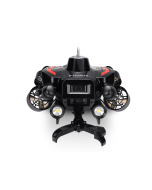
The Qysea Fifish W6 is a complete and robust underwater drone and our flagship for SAR operations. It is designed for intensive use. With a weight of approximately 24 kg, a speed of 4 knots and an underwater payload capacity of 10 kg, it performs reliably even in current and when carrying heavy equipment such as sonar and grippers.
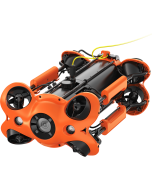
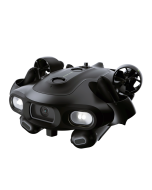
Lightweight alternatives include the Qysea E-GO, weighing 6 kg with a 5 kg payload at 3 knots, and the Chasing M2 Pro Max, also suitable for 3 knots. Thanks to their compact design and swappable batteries, these drones offer fast and flexible deployment.
Smarter, safer and faster underwater operations
Underwater drones are no longer gadgets or toys. They are a valuable addition to search and rescue operations. They save time, improve safety and enable precise deployment of divers. This allows teams to operate more efficiently and effectively underwater.
Looking for a system suitable for search operations? View our underwater drones and ROVs.