 Nederlands


Good lighting with external strobes is essential in underwater photography. Since many modern mirrorless and DSLR cameras no longer have a built-in flash, photographers use flash triggers and TTL converters to enable firing their strobes in perfect sync at any depth.
Flash triggering principles underwater
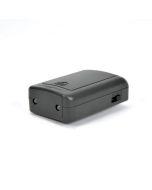
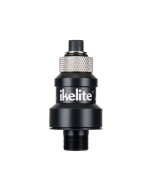
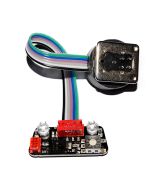
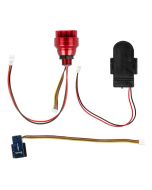
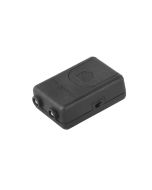
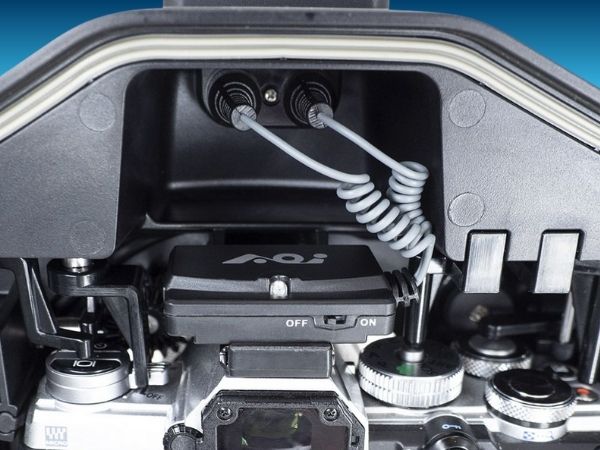
A flash trigger or TTL converter connects to the camera’s hotshoe and transmits the firing signal to external strobes. This can be done optically via fibre-optic cables or electrically through a bulkhead connection. Both communication methods support manual and TTL exposure control.
The trigger interprets the camera’s flash signal and generates either a light pulse or an electrical output. The strobe detects this signal and fires simultaneously with the camera’s shutter, creating perfectly timed illumination.
Optical versus electrical triggering
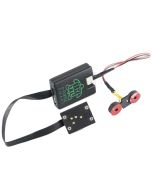
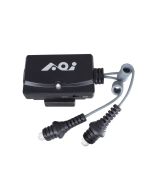
In an optical setup, one or more LEDs in the trigger emit a brief light flash. This light travels through a fibre-optic cable to the strobe’s optical port, where it triggers the external flash. Optical communication is lightweight, reliable and free from leakage risk, making it the standard for most modern housings.
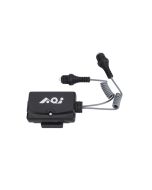
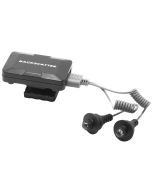
Electrical triggering uses a sync cable connected to a bulkhead on the housing. Although this method allows direct electronic control, it requires O-rings and metal connectors that are heavier, more fragile and potentially susceptible to water ingress. For this reason, many systems have shifted from electrical to optical communication.
Manual and TTL operation explained
Both optical and electrical trigger types are available in manual and TTL versions.
A manual flash trigger simply produces a pulse that tells the strobe to fire. The flash intensity must be adjusted manually on the strobe itself. This setup is simple, fast and energy efficient.
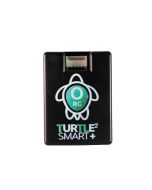
A TTL converter processes information from the camera’s metering system and sends encoded signals — optical or electrical — to control flash output automatically. The duration of the flash is adjusted to match exposure requirements. Some systems, such as those using RC or proprietary optical protocols, transmit this exposure data entirely through light pulses.
Why optical systems are now preferred
Optical triggering offers several advantages: no electrical contacts that could corrode, less chance of leaks, lighter cables and greater flexibility. A detached optical cable allows you to move an external strobe freely . For example, letting a dive partner hold it to create backlighting or side-lighting effects.
Electrical systems still function effectively but are bulkier and require careful sealing. The cable’s stiffness and connector weight can also limit positioning flexibility.
Compatibility between housing, trigger and strobe
Choosing between manual and TTL control often depends on your camera system and the available accessories. The type of connection on your housing and strobe defines which trigger you can use. Optical-only setups require fibre-optic cables, while housings with bulkheads can support either electronic or optical triggering, depending on configuration.
Matching these components ensures that the communication between the camera, trigger and strobes remains reliable, regardless of brand or camera type.
Benefits of modern optical triggers
- Compatible with both manual and TTL operation
- No risk of leaks through electrical connectors
- Lightweight cables and easy setup
- Supports advanced optical TTL protocols
- Allows flexible strobe positioning underwater
Questions?
Choosing the right TTL converter, flash trigger or connection type can be complex. If you’re unsure which components fit your camera and housing, feel free to get in touch. The team at UwCameraStore.com will gladly help you configure your setup. Emails are typically answered within one business day, and phone or chat support are also available.
Return to the flash triggers and TTL converters category to explore compatible products for your system.