 Nederlands


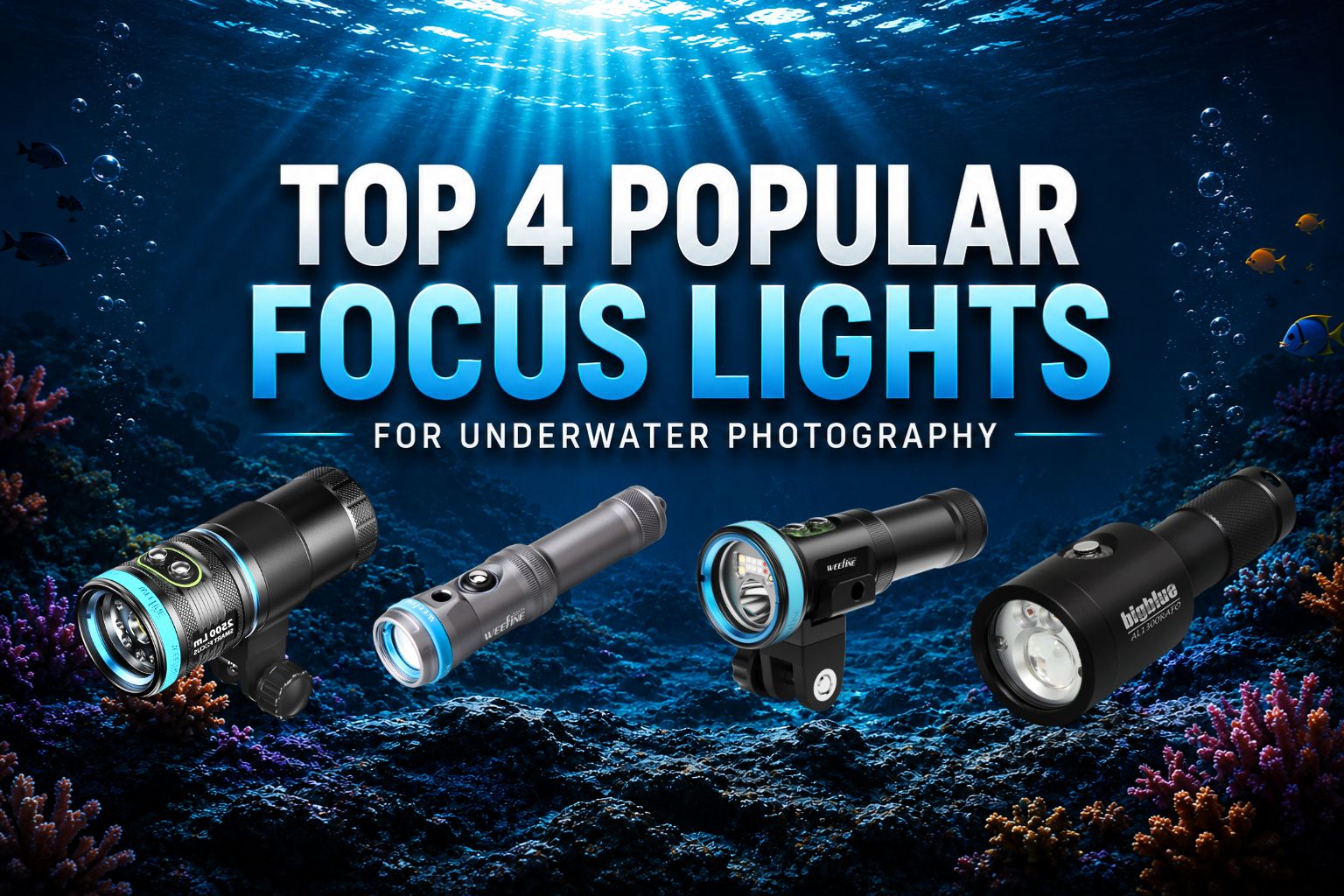
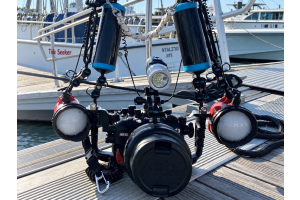
A good focus light is one of those accessories underwater photographers quickly learn to appreciate. It helps cameras focus faster in dark environments and makes macro photography much easier underwater.
 English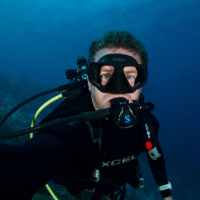
Hi, I'm Sverrin.
There was never a carefully planned "creative path" for me. I simply got into the water because I thought it was the most beautiful place to be.
I started diving in the Netherlands when I was around 15 years old. Open Water first, then continuing all the way to Divemaster. That progression came naturally, but the real turning point was never about certifications. It was that feeling of being underwater, where everything above the surface fades away for a moment. That feeling stayed with me.
In 2012, I worked as a Divemaster at Porto Marie Sports on Curaçao. It was a period filled with warm-water diving, familiar routines, and an endless playground of dive sites. Back then, I carried a Canon G12 in an underwater housing with a Sea&Sea YS-01 strobe. But I wasn't seriously focused on underwater imaging yet. It was more about capturing the occasional moment between dives.
That changed in 2016 during a trip around the world. There was no plan to create content and no ambition to become a "creator." I simply brought a GoPro along, and it ended up being switched on more and more often. While traveling through Southeast Asia and Australia, the footage started to take on a life of its own. People reacted to it, asked questions about it, and that was the first time I thought: okay, this is actually something worth taking seriously.
After that, I started shooting above water with a Fujifilm X-T1 to gain more control over my images. Underwater, I was still using a GoPro. Simple and functional. That changed when I moved to the Sony A6500, the first camera that allowed me to actively create images rather than simply record them.
In 2018, I joined Onderwaterhuis.nl, and that's where my underwater videography really advanced. I started working with a Panasonic GH5 in a Nauticam underwater housing, different lenses, and most importantly, a lot of time in the water. I wasn't just diving for the sake of diving anymore. I was testing, comparing, adjusting, and trying again. What works in theory often doesn't work underwater, so you quickly learn to find the answers yourself.
That period shaped me the most: countless hours of practical experience, extensive testing, and a growing understanding of how light, movement, camera settings, and equipment all work together underwater. That's something you don't learn from a manual.
In 2023 and 2024, my girlfriend and I moved to Curaçao and later Bonaire. Life revolved around the water. I produced video content for companies, worked on dive shoots, and built a substantial stock footage library that is still being used and licensed today. After hundreds of dives, one lesson stands out above all else: the more you do it, the better you become.
Since the end of 2024, I've been back in the Netherlands and working again at Onderwaterhuis.nl / UWcamerastore.com. It feels like a perfect fit. I've filmed, tested, and experienced so much firsthand that I don't have to rely on a standard sales pitch. I can simply share what works in practice and what doesn't.
These days, I'm not at the water's edge in the Netherlands quite as often as I used to be. But the moment I get back in the water, everything feels right again.
Want to see Sverrin’s work in action? Watch his cinematic underwater travel film Things to See on Curaçao and experience the island through his lens.
A good focus light is one of those accessories underwater photographers quickly learn to appreciate. It helps cameras focus faster in dark environments and makes macro photography much easier underwater.